

Nearly two decades after the United States set out to help build a durable post-Taliban state, the Government of the Islamic Republic of Afghanistan (GIRoA) collapsed on 15 August 2021. This piece approaches the collapse through one Commando operation fought two months earlier—a battlefield disaster that reflected the logic of wider defeat.
Afghanistan is not an abstraction to me. It was not just a place I did a deployment and walked away from. For me it’s deeper and more complicated. It’s my heritage, and since 2001 it has also been part of my professional life. I first deployed as an augmentee to 5th Special Forces Group/Task Force Dagger following the 9/11 attacks. Over the next twenty years, several deployments followed, along with regionally adjacent work. By 2012, I had begun to see the system hollowing out. and realized despite the surge, and our collective efforts, this was not working out well for anyone, except for the Taliban. By late 2019, I no longer believed the danger of collapse was unlikely, I saw it as inevitable.
In June 2021, an obscure Commando operation in a small backwater town in the far edges of Afghanistan caught my attention. Retaking the district could not alter the course of the war, yet Kabul sent some of Afghanistan’s most elite soldiers to do it. Why would GIRoA send its best men on a place with no strategic value, held by a few hundred local fighters at most? That was my thought then, and it remains the genesis of this article.
As I tracked the operation through local media and on Twitter, the reports came in fragments, each worse than the last. Then came the heartache. On 16 June 2021, a video taken from Faryab province began circulating across those same feeds. Twenty-two Afghan Commandos, out of ammunition, surrendered to the Taliban. The Taliban summarily executed them in the remote town of Dawlat Abad, Faryab Province. A month and a half later, the entire Afghan government was gone. Their President and leaders fled, their army melted and surrendered, and the Taliban claimed victory.
That tragic moment demands a second look. It exposes the sheer depthlessness of the Afghan government and its planners, men who lacked operational experience and apparent commonsense. It also underscores how our agreement with the Taliban at Doha led directly to this slaughter.
This brings me to a conversation with a military peer. “Dude, the Afghans just wouldn’t fight. They all cut and run.” He wasn’t joking. That was the entirety of his analysis, a headline summarizing a 20-year war. It got me thinking if a military officer who has spent time in Afghanistan thinks like this, what does the average person believe?
So, B.Y., this is for you. For everyone else, here is an insider’s take.
The View from Above
In the summer of 2021, on the briefing slides in Kabul, Afghanistan still looked like a functioning country. The Hindu Kush was still a prominent terrain feature. Kabul lay within its mountain bowl, dusty, slightly battered, but also housing a younger generation with dreams and, after 40years of war, real human capital to advance the country. The borders with Pakistan, Iran, and the former Soviet republics of Central Asia still read as lines the state controlled. The 209th Corps technically possessed its headquarters, provincial governors theoretically held office, and the districts still belonged, on paper, to the Afghan State.
From above, nothing looked wrong. But at the ground level, where the Commandos fought, the illusion was already dissolving.
GIRoA in Reality
Understanding the 2021 collapse in Afghanistan requires looking back to February 2020, when the United States signed a peace agreement with the Taliban. The core deal was straightforward: the U.S. agreed to withdraw its forces, and in exchange the Taliban committed to prevent Afghan territory from being used for attacks against the United States. Following the agreement, the dismantling was already underway. U.S. contractors prepared to depart, bases were closing, and the U.S. presence was dwindling. Furthermore, the complex aircraft maintenance, intelligence, and logistical networks built over twenty years were rapidly liquidated — striking the systems least visible to the public, yet most vital to the war. And most importantly, U.S. airstrikes fell sharply, stripping Afghan ground forces of the critical air support they had grown to depend on.
To an American audience, withdrawal was a policy; though many understood the war in 2001, few understood or supported it in 2021. This is understandable; after twenty years, the Taliban were not defeated, and the Afghan government remained massively corrupt and incompetent. US troops were seemingly stuck in a quagmire.
The Afghan soldiers on the ground experienced it differently. Aircraft maintenance ground to a halt, spare parts vanished, and the American-funded supply system ceased to exist. On the ground, Taliban checkpoints choked off the roads, leaving the country’s vast distances to be crossed only by air. Afghan aviation was suddenly asked to do far more, when it was capable of less. Helicopters had to move troops, deliver ammunition, evacuate the wounded, and supply cut-off outposts. Every emergency demanded another flight, yet every airframe grounded by maintenance narrowed the margins for the next crisis. Troops can’t fight if they don’t have ammo, food, and fuel—it becomes rather that simple.
This triggered a fatal logistical loop: as more remote outposts were cut off by road, Kabul had to rely on helicopters and Commandos to sustain them. This wore down the remaining aircraft and elite troops at an immensely fast rate, leaving the next wave of outposts even more vulnerable; this fatal logistics loop continued until the system collapsed. The collapse was not one decisive battle; it was gradual, and the Afghan State receded unevenly. The reality was that the farther a soldier stood from Kabul, the less certain he could be that ammunition, aircraft, or authority would reach him before the Taliban did.
The Tipping Point
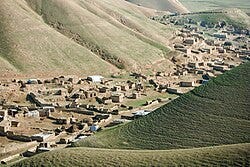
To the Northwest, beyond the central mountains and Bamiyan, Afghanistan opens into the plains of old Afghan Turkestan. Here, the country is lower, broader, and closer to Central Asia. Imagine a landscape of wheat fields, irrigation channels, and long desolate roads that stretch toward the Iranian border. Faryab Province lies in this expanse, far from the influence of Kabul and its ministries. The population in Faryab is largely Uzbek, with Tajik, Turkmen, and small Pashtun communities layered across a territory shaped by trade, agriculture, factional politics, and repeated war. Northeast of the provincial capital of Maymana stands Dawlat Abad. The town itself was no great military prize; no airport, no strategic dam, and it contained no regional army headquarters, and did not sit on a vital supply route. It did contain a small district center where the Afghan state was barely visible: the governor’s compound and police headquarters, surrounded by villages and small one-story storefronts.
Dawlat Abad fell to the Taliban on June 8, 2021.
There was resistance from government forces, but they withdrew after heavy fighting. The issues were always the same. Lack of resupply, lack of follow-on forces. The Taliban raised their flag, and many of us Afghan watchers watched as they accelerated across the North using the same pattern: outposts were surrounded, roads were cut off, and local elders carried proposed terms of surrender between Taliban commanders and isolated Afghan garrisons. While some units fought, others calculated Kabul could no longer reach them and chose to lay down their weapons.
Yet even as the provinces slipped away, the Ashraf Ghani government in Kabul still believed the trend could be reversed. They relied on a single, increasingly exhausted asset to salvage the disaster: the Afghan Commandos. Trained by U.S. and NATO Special Operations to serve as elite light infantry. These Afghan special forces units were disciplined and lethal, but they were now being flown from province to province to plug gaps where the regular army had crumbled.
At six AM on June 16, 2021, fifty Afghan Commandos retook the town of Dawlat Abad in northwestern Afghanistan. They had seized the objective on the orders of the Afghan Ministry of Defense, under the direction of President Ashraf Ghani. Once the Taliban were driven out, the Commandos waited for government reinforcements to arrive. The Taliban came first.
In the last days of the Afghan Republic, the Commandos remained a viable combat force. Because they remained willing and able to stand and fight, Kabul kept spending them. The leadership of Ashraf Ghani committed the Commandos to indefensible pockets the rest of the military could no longer support — crisis-response operations across a country whose roads were already cut. The aircraft meant to carry them, resupply them, provide ISR and close air support were already nearly nonexistent.
Sohrab Azimi and the Afghan Commandos
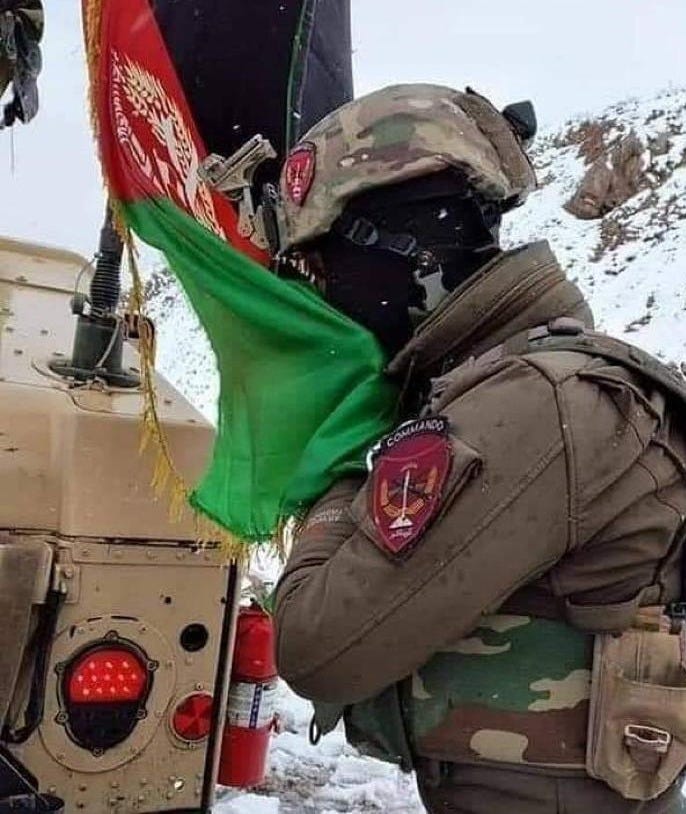
Approximately fifty Commandos were assigned to retake Dawlat Abad. They were led by Sohrab Azimi, a thirty-one-year-old commander from Herat. Trained in America and Turkey, Azimi was well-educated and connected enough to have chosen a much safer career. His father, General Mohammad Zahir Azimi, had served as the prominent spokesman for the Ministry of Defense—a comfortable path Sohrab ignored in favor of the front lines.
In the field, his specialty was not only command but air support. Azimi and his Commandos had already spent roughly fifty days in Faryab, which was barely holding on against street-by-street disassembly. He returned briefly to Kabul for rest and recuperation, then volunteered to go back. He was engaged to an American woman and expected to marry her the following month. He went north instead.
Before departing, he sent friends a final message: “Back to Faryab.” Azimi and his men belonged to the most capable part of the Afghan military. They were better selected, more intensively trained, and much more cohesive and capable in tactics than rest of the conventional force. The gap between the regular Afghan army and the Commandos was wide and anyone with experience in Afghanistan knew that and recognized it. The Commandos could move at night, raid compounds, assault fortified positions, and continue fighting after less disciplined units had begun to fracture. During my deployments to Afghanistan, I was honored to have personally planned missions and worked with a variety of Commando units. My respect for these men is more than academic. Yet for all their training, the Commandos were nor designed and built to hold the ground they took--they were a shock-assault force and relied on the Afghan Army to hold and defend ground.
The official plan for Dawlat Abad recognized that distinction: Azimi’s Commandos were to assault the town, clear the Taliban fighters occupying the district center, and hand over control to conventional forces to move in, secure the roads, fortify defensive positions, and absorb the inevitable Taliban counterattack.
The plan contained a hidden fracture: while the initial assault belonged to a disciplined special-operations structure, the holding force was divided among three institutions, with different commanders, communications, capabilities, and degrees of confidence in the mission. These Afghan institutions included the Afghan Army, Afghan Militia Forces, Afghan Police and their National Directorate of Security (Intel). Though their orders and movements had been placed together, they were not a unified force, and no unified joint and interagency command structure was in place.
For a brief interval, the operation looked like success.
The flag had changed. Kabul had answered the loss of a district. An elite Afghan force had entered hostile ground and accomplished the task given to it. The Commandos looked to the roads for the 170 men who were supposed to follow them and provide the needed support to hold ground.
Somewhere beyond the district center, a far larger Taliban force was already waiting. Afghan officials later suspected the operation had been compromised, though no public investigation ever established who may have leaked the plans. Approximately fifty men from the relief force attempted to advance, but they collided with a massive Taliban ambush and pulled back. The army, police, and intelligence units slated to follow the Commandos remained outside the district.
Whether they lacked the combat power to break through, feared a trap, or simply believed the mission was already compromised remains disputed.
The result was that no holding force reached the Commandos.
An assault force is most vulnerable after it stops, and the enemy now knows where the assault force is. The Taliban began to close around the Commandos. Routes that should have carried reinforcements became avenues of approach for the enemy. Firing positions appeared around the district center. Azimi’s men called for ground support. None arrived. They called for aircraft. The sky remained empty.
Sohrab Azimi was among the dead. The following month was supposed to bring his wedding.
American Training in Afghanistan
The United States did not originally train the Afghan Commandos to replace the Afghan Army. They trained them to perform the missions the conventional Afghan army was too slow, or too compromised to execute. In the simplest terms, they were a force that could raid a site, hit an objective, or go after high-value targets, day or night, backed by close air support and ISR platforms.
The men who died at Dawlat Abad were not proof that the Commando program had failed; they were proof that it had worked. In June of 2021, it was the Commandos and a handful of regular army units that were still conducting combat operations against the Taliban.
The catastrophe was believing that a few thousand elite soldiers could indefinitely replace a hollowed-out state and national army that was already defecting en masse.
The United States had built a spearhead for the most violent hours of the war. But Kabul and its partners expected that spearhead to also be the army, the air force, the supply system, and the State. No special forces unit, no matter how capable, could carry that kind of weight.
An enemy built for time and Pakistan
The Commandos could defeat Taliban fighters in the field, and they often had since their creation in late 2007, but they could not defeat the Taliban’s theory of victory.
While the Afghan government needed permanent stability to survive, the Taliban had a system built for time, anchored in Pakistan. They did not need to destroy every government unit or defeat the Commandos in a decisive battle — there were, in fact, very few decisive battles in the twenty-year war. The Taliban needed to outlast the coalition and the donors that paid the Afghan government, who sadly could not muster a credible economy after twenty years.
The Taliban’s military system was cruder than the Afghan government’s, and that crudeness made it far more durable.
A Taliban unit traveled light, lived off sympathetic or intimidated villages, and dispersed into the population. They did not require a national logistics supply chain to repair a pickup truck, nor did they need to submit bureaucratic fuel requests to a corrupt ministry in Kabul. Their commanders recruited locally, taxed trade routes, exploited narcotics networks, and replenished their ranks across a Pakistani border that the Afghan government could never close.
Pakistan’s role was one of the war’s enduring strategic facts. Taliban leaders and fighters benefited from sanctuary, recruitment, medical care, and intelligence support from Pakistan. Commandos would often destroy a cell, take out key commanders, and clear Taliban controlled areas. The Taliban would appoint replacements, move men across other routes, and return when government attention shifted elsewhere. The Clear-Hold-Build framework, while theoretically sound, never became a reality outside of Kabul and other major cities.
A Government Without a Campaign
The Republic’s failure went far deeper than broken supply lines.
In the final years of the war, President Ashraf Ghani repeatedly purged his security ministries. Many competent officers were sidelined in favor of loyalists, their appointments entangled with ethnic favoritism, factional politics, and a paranoid desire for absolute Presidential control. Ghani intended this hyper-centralization to enforce loyalty—instead, it paralyzed the State.
Every operation required a Presidential signature. Field commanders sat stranded, waiting for direct access to Ghani or higher up in the MOD for supply requests. Key officials were rotated out faster than relationships could be built, leaving responsibility to float upward to an isolated President, while critical intelligence crawled down to the front lines, if it arrived at all.
When Ghani finally announced a national strategy to defend the provincial capitals on July 26, 2021, the war was already lost. The Taliban’s offensive had already swallowed the countryside and were standing at the city gates.
The Many Lessons of Afghanistan
The easiest lessons are also the most dishonest: the Afghans would not fight and that they were corrupt. Indeed, some conventional units did not fight and deserted in the last weeks of the Ghani regime, and corruption was endemic throughout the twenty-year war.
It is a convenient verdict, and this essay was not built to argue all of it. It turns twenty years of decisions into a defect of national character. It absolves, the ministries that stole from their soldiers, the commanders who abandoned their positions, the politicians who appointed loyalists over professionals, and the foreign partners who built capabilities that could not survive their departure. This was failure by many, at scale, full stop.
The harder lesson is that the United States built an Afghan force optimized to fight inside a system that only the United States could keep alive. When that system was withdrawn, the Commandos were asked to compensate through courage and tactics alone.
The central lessons are:
• Remove the intelligence that locates the enemy, the aircraft that carry and protect the assault force, the logistics that deliver ammunition, the medical evacuation that sustains morale, and the conventional troops expected to hold the ground — you will lose every time.
• The United States built much of the Afghan military in its own image, dependent on air superiority, sophisticated intelligence, contractor maintenance, and foreign funding that Afghanistan could not independently sustain.
• Withdrawal was never simply a date or a troop number. It began whenever an American function disappeared without an Afghan replacement: air support, intelligence, maintenance, logistics, medical evacuation, or the confidence that help would come.
The Commandos’ success concealed the larger weaknesses of the Afghan government — tactical victories masked institutional decay. For those watching Dawlat Abad unfold in June 2021, the collapse wasn’t pending. It was already there.
Sohrab Azimi and his Commando unit, like other Commando units executed every order given to them and they fought with distinction. To honor them, we need to reflect and learn. This single specialized force was ordered to carry the dead weight of a failing state—until its men were left to die by their own government in the gap between the Afghanistan that existed on the ground, and the one that existed in the mind of President Ghani and his government.
Future security-assistance programs must be built around four questions: Who will pay? Who will maintain it? What happens when we leave? And how will the men who fought — now permanent enemies of whoever remains — be protected?